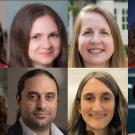
Mariel Vazquez, an internationally recognized applied mathematician who held a joint appointment as a professor in the Departments of Mathematics, and Microbiology and Molecular Genetics (MMG), passed away on July 5, 2026, at the age of 55. She is survived by her husband Javier Arsuaga, a professor of mathematics and molecular and cellular biology, and their children Eithne and Cedric Arsuaga-Vazquez, as well as her parents Maria Elena and Rolando Antonio Vazquez and a large extended family.
Cancer cells are quick to develop resistance to anti-tumor drugs. New research by scientists from the University of California, Davis shows how cancers adapt to evade a class of anti-tumor drugs called BET inhibitors and offers hope for more effective therapies.
Satoshi Namekawa, a professor of microbiology and molecular genetics whose research has advanced our understanding of fertility, epigenetics and genome organization, has been named chair of the Department of Microbiology and Molecular Genetics (MMG). He will begin serving in the role on July 1, 2026.
The causes of male infertility can be hard to diagnose, with many tests failing to detect genetic defects. Sometimes, infertility doesn’t even involve the genes themselves. It can arise from improper folding of the father’s DNA in the sperm. If a couple conceives, this mispackaged DNA can damage the lifelong health of the child.
A major new discovery could inspire improved treatments for cancer and genetic diseases.
Coiled within our cells are fragile threads of DNA that contain the codes of life— determining when each of our 30 trillion cells must grow, divide, sit tight — or simply die. This arrangement is precarious. Billions of times per day, our DNA is severed by stray chemical reactions. Our cells must rebuild the broken DNA without making mistakes – or the consequences can be dire.
They are experts in a parasitic amoeba, scientific history, the health effects of stress and more, and now these eight faculty members can add a new title: Chancellor’s Fellow.
The recognition is given each year to early career academics doing exemplary work, and the 2025-26 class will be recognized at a reception next week.
Iliya Voytsyshyn, a fourth-year systems and synthetic biology major from Ukraine, entered UC Davis with plans to study cancer. That initial goal grew into a fascination with tools that fuse biology, systems design and gene editing to re-engineer cells.
When a woman becomes pregnant, the outcome of that pregnancy depends on many things — including a crucial event that happened while she was still growing inside her own mother’s womb. It depends on the quality of the egg cells that were already forming inside her fetal ovaries. The DNA-containing chromosomes in those cells must be cut, spliced and sorted perfectly. In males, the same process produces sperm in the testes but occurs only after puberty.
In the college, undergraduate students don’t just learn from textbooks—they actively contribute to new scientific knowledge through hands-on research. This experiential learning is a hallmark of a UC Davis education, especially in the life sciences.
For his outstanding commitment to ensuring undergraduate students have these meaningful and immersive research experiences, Chang‑il Hwang, an associate professor of microbiology and molecular genetics, has received a 2025 Chancellor’s Award for Excellence in Mentoring Undergraduate Research.
Neil Hunter, a professor in the Department of Microbiology and Molecular Genetics and an Investigator with the Howard Hughes Medical Institute, has been elected as a Fellow of The Royal Society in London.
This prestigious appointment, announced May 20, was offered to only 70 scientists across the world.
“I’m thrilled and surprised,” said Hunter. “The acknowledgment means a great deal to me, because it’s an election by some of the best scientists in the world.”