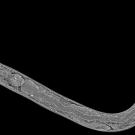
Emery-Dreifuss muscular dystrophy (EDMD) is a devastating genetic disease that causes progressive muscle weakness and wasting. EDMD is caused by mutations in proteins within the nuclear envelope, yet the disease disrupts the organization and function of entire muscle cells. A new study by UC Davis researchers reveals one mechanism that may explain this connection.
The American Society for Cell Biology (ASCB) has elected Dan Starr, professor in the Department of Molecular and Cellular Biology, as a 2026 ASCB Fellow.
Starr is one of 15 scientists elected this year in recognition of exceptional contributions to cell biology and the society. ASCB Fellows are selected by their peers and approved by the ASCB Council, recognizing careers distinguished by scientific excellence, leadership and service to the cell biology community.
The tiny aquatic hydra looks fragile at first glance, with tentacles that are slender and translucent. But if you cut it in half, each fragment regenerates into a complete new animal. Scientists studying this amazing feat have discovered a surprising detail: to trigger healing, specialized cells first have to invade the wound in a manner similar to what cancer cells do as they spread through the body.
A nerve cell resembles a vast tree with branches that communicate with thousands of other cells. To function, it depends on a motor protein that walks on two legs, hauling urgent cargo from the center of the cell to the faraway tips of every branch. Scientists have unveiled a new structure of this walking protein, showing how cells control it.
Sean Burgess, a professor of molecular and cellular biology whose research has advanced understanding of chromosome inheritance, reproductive biology and human developmental disorders, has been named chair of the Department of Molecular and Cellular Biology (MCB). She will begin serving in the role on September 1.
Thousands of times per year, a family’s moment of joy turns to unexpected grief. A seemingly healthy infant stops smiling or making eye contact. Their limbs grow weak. The tiny child suffers seizures and breathing problems.
Jawdat Al-Bassam, an associate professor of molecular and cellular biology at the University of California, Davis, often hears from these families. “I’ve gotten emails from folks all over the world,” he said.
For Mark Winey, the path into biology was deeply personal from the start. Watching his sister live with an inherited metabolic disease sparked a curiosity about genetics that would shape his entire career.
He is this month’s guest on Face to Face With Chancellor May.
Now a Distinguished Professor in the Department of Molecular and Cellular Biology, and dean of the College of Biological Sciences, Winey reflects on a journey shaped by both personal motivation and professional passion.
It’s not often that a Nobel laureate visits a UC Davis undergraduate classroom, but this year, a biochemistry class in Kleiber Hall struck “gold”—twice.
Not one, but two Nobel laureates chronicled their scientific careers and answered questions during their virtual visits to UC Davis Distinguished Professor Walter Leal’s winter quarter class, “Structure and Function of Biomolecules.”
Fourth-year biological sciences major and Barry Goldwater Scholar recipient Azucena Virgen studies the regenerative biology of Hydra — a freshwater organism known for its ability to regrow entire body parts — at the UC Davis Juliano Lab. What began as a fascination in a high school biology class in her hometown of Woodland, California, grew into a long-term goal to lead a research lab