The UC Davis College of Biological Sciences has named Oliver Fiehn, professor of molecular and cellular biology, to the Paul K. and Ruth R. Stumpf Professorship in Plant Biochemistry.
An internationally recognized scholar, Fiehn has more than 220 publications to his name. He has driven significant developments in the field of metabolomics, the study of small molecules known as metabolites. Metabolites are the end products of cellular processes and form the chemistry of all life.
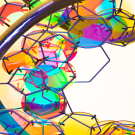
If you’ve ever tried to untangle a pair of earbuds, you’ll understand how loops and cords can get twisted up. DNA can get tangled in the same way, and in some cases, has to be cut and reconnected to resolve the knots. Now a team of mathematicians, biologists and computer scientists has unraveled how E. coli bacteria can unlink tangled DNA by a local reconnection process. The math behind the research, recently published in Scientific Reports, could have implications far beyond biology.
Assistant Professor Sean Collins, Department of Microbiology and Molecular Genetics, has received a $1.5 million award from the National Institutes of Health to advance the development of “smart” immune cells for therapies to treat cancer and other diseases. The five-year NIH Director’s New Innovator Award aims to provide new insight into how to engineer immune cells to control their recruitment and response to tumors.
For Ernesto Sandoval, cultivating plants is a labor of love. He spends most of his days working closely with plants and people and facilitating interactions between the two. He runs tours, keeps the greenhouses in order and shares his knowledge of plant science with visitors.
Eric Conn, professor emeritus of molecular and cellular biology, was a plant biochemist and member of the National Academy of Sciences. Conn is world-renowned in his field for his contributions to the understanding of plant metabolism, and he held tenure for 43 years with the University of California.
He passed away on Saturday, Sept. 2, 2017.
While the definitive causes remain unclear, several genetic and environmental factors increase the likelihood of autism spectrum disorder, or ASD, a group of conditions covering a “spectrum” of symptoms, skills and levels of disability.
Kimberley McAllister, a professor in the Departments of Neurology in the School of Medicine and Neurobiology, Physiology and Behavior in the College of Biological Sciences has been appointed permanent director of the UC Davis Center for Neuroscience.
Baladi is responsible for bringing new therapies for rare genetic disorders to patients as quickly as possible. She works with health authorities to develop strategies to facilitate accelerated and standard clinical development procedures.
After recently publishing his last manuscript and closing his research lab, Cuppoletti has shifted his focus to a new role. He now serves as the volunteer director of University of Cincinnati’s internal grant program, which coordinates and distributes funding to students and faculty.
Lopez worked in Oakland at health and technology non-profit Youth + Tech + Health. She served as a creative digital strategist where she handles communications, marketing and visual design projects. This non-profit focuses on developing technology for the health of youth.