Grace Ha is a Ph.D. candidate in marine ecology at UC Davis, where her thesis focuses on the analysis of camouflage in marine ecosystems. She is participating in the Leaders for the Future program, a five-month cross-campus collaboration between the Office of Research, the Career Center, GradPathways (Graduate Studies) and our institute. She recently participated in the Food, Ag + Health Entrepreneurship Academy as our 2018 Harkins Fellow.
For more than a decade, Assistant Professor Richard McKenney, Department of Molecular and Cellular Biology, has dedicated his research to the microscopic world of movement and transportation within cells. Now, a two-year, $150,000 research award from the March of Dimes will support his research to better understand how molecular dysfunction influences prenatal brain development.
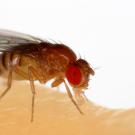
In a study appearing in Current Biology, Michael Turelli, distinguished professor of genetics in the Department of Evolution and Ecology, and his colleagues traced the spread of closely related Wolbachia across Drosophila fly species. They found that while the flies evolutionarily diverged tens of millions of years ago, their Wolbachia bacteria diverged only tens of thousands of years ago.
As healthcare professionals, pharmaceutical companies, patients and families grapple with the opioid crisis, researchers are rushing to design safer opioids. Center for Neuroscience Associate Director Jennifer Whistler believes drug development is headed in the wrong direction when it comes to opioids. Her solution: design a better drug that mimics the body's natural pain reliever, endorphin.
According to Stacey Combes, it’s not hard to train a bee to fly upwind in a wind tunnel. “They like certain colors and certain scents. And they like to feed.”
A group of female academics is calling on scientific conferences to do more to accommodate nursing mothers and parents to help normalize parenthood in academia — removing a significant barrier to women beginning their careers in science.
Software inspired by speech recognition technology could help scientists understand the secret language inside cells. A machine learning algorithm called patteRNA, designed by UC Davis researchers, rapidly mines ribonucleic acid, commonly called RNA, for specific structures, providing a new method to establish links between structure, function and disease.
Native wildflowers were surprisingly resilient during California’s most recent drought, even more so than exotic grasses. But signs of their resilience were not evident with showy blooms aboveground. Rather, they were found mostly underground, hidden in the seed bank, according to a study from the University of California, Davis.
In a paper appearing in PLOS Biology, Joseph Edwards, ’17 Ph.D. in Plant Biology, Professor Venkatesan Sundaresan, Departments of Plant Biology and Plant Sciences and their colleagues tracked root microbiome shifts throughout the life-cycle of rice (Oryza sativa). The research could help inform the design of agricultural probiotics by introducing age-appropriate microbes that promote traits like nutrient efficiency, strong roots and increased growth rates in rice plants.