Each year, the College of Biological Sciences honors its top undergraduate students for their research contributions. The following students were recognized during commencement.
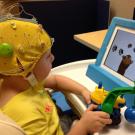
Supported by a five-year grant from the National Institutes of Health, Corina and Lee Miller, associate professor of neurobiology, physiology and behavior at UC Davis, are working to understand why some children respond better to the implants than others.
A University of California, Davis, microbiologist who studies how a parasitic amoeba kills cells has been named as a 2016 Pew scholar in the biomedical sciences by the Pew Charitable Trusts. The scholarship program provides funding to outstanding young scholars working to advance human health.
World Oceans Day is June 8. It’s a day across the world to celebrate our large expanses of sea and to collaborate for a better future.
And this is just what UC Davis scientists are doing. Our researchers are discovering how climate change and human garbage hurt our oceans and their flora and fauna.
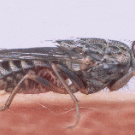
Zebra stripes have fascinated people for millennia, and there are a number of different theories to explain why these wild horses should be so brightly marked. A handful of laboratories around the world – including one lead by UC Davis wildlife biologist Tim Caro – have been putting these theories to the test. A new paper from Caro’s group, led by Ken Britten at the UC Davis Center for Neuroscience, puts a hole in one idea: that the stripes confuse biting flies by breaking up polarized light.
Today’s White House announcement of the National Microbiome Initiative will bring new funding and attention to better understand the billions of microbes that swarm around in and around us and probably play an important role in our health, food and environment. At UC Davis, many scientists are already exploring this hidden world. Here are a few of them.
Marc Pollack, a Ph.D. student in the UC Davis Microbiology graduate group, and Jeremy Warren, a former postdoc in Plant Pathology, leave Davis at 5 a.m. every weekday morning to commute to IndieBio, a startup accelerator in a narrow alley just south of Market Street in the heart of San Francisco.
It’s where, for four months, they will represent the rest of their team and strenuously refine the business idea behind Astrona, a pathogen detection startup that originated as one of 13 UC Davis interdisciplinary research programs funded by a grant from the Office of Research.
When wildfire ripped through two UC Davis natural reserves last summer, scientists conducting research there first took a pained look to see if their months or years of research just went up in flames. Then they did what one would expect from scientists: They began to study the effects.
Researchers have known for more than a decade that the risk of heart disease and stroke increases when people take pain relievers like ibuprofen and other non-steroidal anti-inflammatory drugs, or NSAIDs. Now, scientists from the University of California, Davis, have uncovered some of the reasons why these drugs can harm heart tissue.
The Academic Federation recently announced Sean Davis, Nathan C. Rockwell and Wrye Sententia as the recipients of its Excellence in Teaching and Excellence in Research awards for 2016: