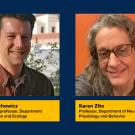
Earlier this week, UC Davis named a new class of Chancellor’s Fellows — faculty members who will carry the chancellor’s imprimatur for five years in recognition of their outstanding work in academia.
“These 12 newest fellows represent our university at its very best,” Chancellor Gary S. May said. “They are now part of a proud 22-year history for the Chancellor’s Fellows program. These fellows are making advances that help solve complex and critical issues, while also helping our students become critical thinkers and problem-solvers.”
Nine faculty from UC Davis are among 564 newly elected fellows of the American Association for the Advancement of Science, announced today (Jan. 26). AAAS fellows are scientists, engineers and innovators who have been recognized for their achievements across disciplines ranging from research, teaching and technology, to administration in academia, industry and government, to excellence in communicating and interpreting science to the public.
Here are the new fellows from CBS, listed with their AAAS commendations:
In the second year of this program, Chancellor Gary S. May and academic leadership selected five fellows, four from the Academic Senate and one from the Academic Federation. Each fellow has received $5,000 in academic enrichment funds.
It’s estimated that over 281,000 women in the U.S. will be diagnosed with breast cancer this year, according to the National Cancer Institute. And about one in seven women will receive a breast cancer diagnosis in their lifetime.
For those with breast cancer gene 2 (BRCA2) mutations, the risk of developing breast cancer is much higher. Between 45 and 69 percent of those with this genetic mutation will develop breast cancer by 70 to 80 years of age.
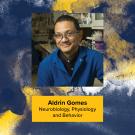
Aldrin Gomes, a professor in the Department of Neurobiology, Physiology and Behavior, is interested in how commonly used drugs like ibuprofen affect the heart. His lab has helped advance our understanding of how commonly used drugs damage our cells, and has recently been recognized for an exceptional commitment to safety.
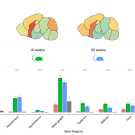
The first atlas of metabolites in the mouse brain has been published by a team led by UC Davis researchers. The dataset includes 1,547 different molecules across 10 brain regions in male and female laboratory mice from adolescence through adulthood and into advanced old age. The work is published Oct. 15 in the Nature Communications. The complete dataset is publicly available at https://mouse.atlas.metabolomics.us/.
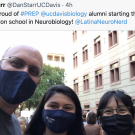
Four UC Davis postbaccalaureate researchers returned to campus this fall as both graduate students and fellows of the prestigious National Science Foundation (NSF) Graduate Research Fellowship Program (GRFP). The NSF GRFP supports outstanding scholars in STEM fields, providing a three-year annual stipend of $34,000 along with a $12,000 cost of education allowance for tuition and fees.
Opioids are powerful painkillers but their use is hindered because patients become tolerant to them, requiring higher and higher doses, and overdoses can cause respiratory depression and death. A recent study from researchers at the UC Davis Center for Neuroscience contradicts existing thinking about how opioid drugs cause tolerance and respiratory depression, and suggests a new, balanced approach to developing safer analgesics. The work was published July 13 in Neuropsychopharmacology.
Four members of the UC Davis College of Biological Sciences are recipients of 2021 Chancellor’s Awards for Excellence in Undergraduate Research. Two undergraduate students, a faculty member and a postdoctoral researcher were among those honored by UC Davis Chancellor Gary S. May at the virtual awards ceremony.
Think of chromosomes as nature’s shoelaces. Built from DNA, these thread-like structures carry and ferry the genetic information necessary for life. To maintain genetic integrity, chromosomes possess protective structures located at their ends called telomeres. These telomeres are like the plastic tips of shoelaces, preventing the genetic thread from unraveling as cells continuously divide.