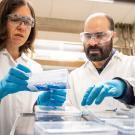
Funding agencies and universities should make it more equitable for early-career investigators with non-traditional career paths to compete for grants and progress in their careers, argue four scholars with non-traditional backgrounds in a paper published in PLOS Biology in the fall of 2023.
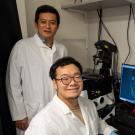
Yasuhisa Munakata, a postdoctoral fellow in the College of Biological Sciences, has received a grant to study how egg cells in the ovary change over time. “Our goal is to understand female reproductive aging, and why fertility rapidly declines starting in the mid-30s,” says Satoshi Namekawa, a professor of Microbiology and Molecular Genetics, in whose lab Munakata works.
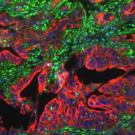
Pancreatic cancer is the third leading cause of cancer-related deaths in the United States and only 12% of patients survive five years after being diagnosed. Severe pancreatic cancer is associated with metastasis, and it is this spread of secondary tumors that usually causes death, but little is known about the molecular mechanisms that drive metastasis.
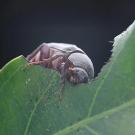
Life on Earth runs on a 24-hour cycle as the planet turns. Animals and plants have built-in circadian clocks that synchronize metabolism and behavior to this daily cycle. But one beetle is out of sync with the rest of nature.
Ben Cox and Rebecca McGillivary, postdoctoral researchers in the Department of Molecular and Cellular Biology, are among 10 early career scientists selected to receive 2022 Hartwell Biomedical Research Fellowships, which were announced in August, 2023.
The Hartwell Foundation, which supports innovative and cutting-edge biomedical research that may benefit children, provides fellows with $100,000 in funding, split between two years.
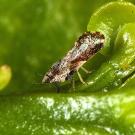
A failed field test has led to a major discovery about the Asian citrus psyllid, the insect that spreads the devastating citrus greening disease. According to new research, the bacteria that cause citrus greening can interfere with the insect’s sense of smell, rendering some kinds of insect traps useless. The work is currently available as a preprint.
Female zebrafish (Danio rerio) have an unusual tendency: if their egg cells are damaged, they can turn into males. Bruce Draper, a professor in the Department of Molecular and Cellular Biology (MCB) and Florence Marlow, a professor at the Icahn School of Medicine at Mount Sinai, have discovered that immune cells called macrophages play a key role in this process. These cells normally keep things “tidy” by removing dead or damaged cells – but in zebrafish they can also remodel the ovaries into sperm-producing testes. “It’s a pretty interesting and novel idea,” says Draper.
Neutrophils, the primary foot soldiers of the immune system, swarm to sites of infection and inflammation by following breadcrumb pathways made up of signaling molecules. But the human body is a complex place, and neutrophils are often simultaneously bombarded with multiple signals, some of which are more important than others. For example, signals of infection or tissue damage require more urgent attention than signals produced by other immune cells.
Scientists have long known that chloroplasts help plants turn the sun’s energy into food, but a new study, led by researchers in the Department of Plant Biology, shows that they’re also essential for plant immunity to viral and bacterial pathogens.
Chloroplasts are generally spherical, but a small percentage of them change their shape and send out tube-like projections called “stromules.” First observed over a century ago, the biological function of stromules has remained enigmatic.
Cancer often starts with the reshuffling of DNA—akin to scrambling the pages of a dictionary. Exactly how this happens has long been a mystery. But researchers in the UC Davis College of Biological Sciences have now arrived at one promising explanation.
The problem seems to happen at a critical moment: when the cell is fixing a broken string of DNA. This repair process, called homologous recombination, can go awry, says Wolf-Dietrich Heyer, a Distinguished Professor and chair in the Department of Microbiology and Molecular Genetics.