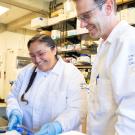
The global dietary supplements market, valued at $178.8 billion in 2023, is rapidly growing. Exercise physiologist Keith Baar specializes in sports medicine and studies the effects of collagen, whey and omega-3 supplements on bone and tendon health.
Each year, nearly 30 million Americans purchase a real tree for the holidays. Growing the perfect Christmas tree takes about seven years, during which farmers need to keep insects, fungal pathogens and hungry deer at bay. While researchers suspect the distinctive piney smell the trees emit plays a role in deterring these pests, not all trees smell the same, and which chemical blends confer resistance is unclear.
The development of maternal egg cells is pivotal for survival – but also precarious. During meiosis, the DNA-containing chromosomes can easily be broken or lost, causing infertility, miscarriage, or genetic disorders. Scientists have struggled to study these crucial cellular events in humans and other mammals.
Wolf Dietrich-Heyer, a Distinguished Professor and chair in the Department of Microbiology and Molecular Genetics was among three members of the UC Davis community recognized for their remarkable efforts to steward donors and raise the culture of philanthropy across the university.
The Office of Development and Alumni Relations and the UC Davis Foundation presented the 2024 Faculty and Staff Stewardship Awards during a ceremony on Oct. 19. The recipients are:
A flowering plant might not be able to tell how many fingers you’re holding up, but it can tell whether it’s light or dark outside and might grow differently if it suddenly finds itself in the shade of another plant.
Plants do that through photoreceptors, which are a major focus of research for John Clark Lagarias, a distinguished professor emeritus of molecular and cellular biology.
Photoreceptors have important uses, like measuring the length of the day; plants can tell when seasons change because the days get longer or shorter.
Sam Arcement—Director of Graduate Academic Programs for the College of Biological Sciences, and the program coordinator for the Molecular, Cellular, and Integrative Physiology (MCIP) Graduate Group—has been honored with the 2024 Outstanding Graduate Program Coordinator Award from the Office of Graduate Studies. This year saw a record number of nominations. “Sam tirelessly ensures that our needs and concerns are heard and addressed,” said one MCIP student, who praised Arcement’s dedication to student advocacy.
Commitment.Passion. Empathy. These descriptors were just a few of the plaudits the winners of the 2024 Graduate Program Advising and Mentoring Award received in their nomination letters.
“[This professor’s] mentorship is always the perfect balance of pushing you to your full capacity, while also supporting at a level that fosters independence, creativity and self-ownership.”
“[This professor] combines a deep sense of empathy with a steely commitment to student development.”
Jessica Bolivar, a graduate student in the Biochemistry, Molecular, Cellular and Developmental Biology (BMCDB) Graduate Group, knows firsthand the difference that one person’s mentorship can make.
During her time at UC Davis, Bolivar has made it her mission to give back and inspire the next generation of scientists by balancing her research with a slew of community-uplifting and diversity, equity and inclusion initiatives.
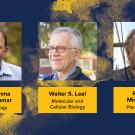
Three professors from the University of California, Davis, have been elected as members of the National Academy of Sciences. They are among 120 new members and 24 international members announced by the academy April 30.
Members are elected in recognition of their contributions to original research. Membership in the academy is considered one of the highest honors a scientist can achieve.
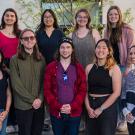
The UC Davis College of Biological Sciences champions Diversity, Equity, Inclusion, and Justice (DEIJ) through the Graduate Student DEIJ Leader Fellowship program. Now in its second year, the program empowers enterprising graduate students committed to enhancing DEIJ within the CBS community by supporting projects aimed at fostering a more inclusive academic environment.