Thanks to a roughly 5-year, $850,000 CAREER grant from the National Science Foundation, Assistant Professor Gerald Quon will develop next-generation computational tools that will allow researchers to better understand and analyze single-cell genomic data.
Professor Paul Knoepfler, UC Davis Genome Center, studies the epigenetic and transcriptional control mechanisms that direct stem cell fate and tissue growth. He's also a writer, recently co-authoring the book How to Build a Dragon or Die Trying: A Satirical Look at Cutting-Edge Science with his daughter Julie Knoepfler. Helen Pilcher recently reviewed the book in Nature.
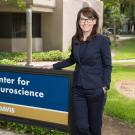
UC Davis Center for Neuroscience Director Kimberley McAllister studies the puzzle of the developing brain. Part of her research focuses on why viral infection during pregnancy can increase the likelihood of a child developing autism and schizophrenia.
The genomes of wild animals can help us understand how they have adapted to unique situations, give insight into their evolution and help in efforts to protect or restore endangered species. Two examples are recently published chromosome-scale genome assemblies for the Masai giraffe and the gemsbok.
While we know certain plant-derived compounds act as insect repellents, much of the molecular science behind insect olfaction remains a mystery. In a study published in iScience, UC Davis researchers exposed further layers of complexity in the mosquito olfactory system.
In a study appearing in Science, Assistant Professor Celina Juliano, Department of Molecular and Cellular Biology, and her colleagues used single-cell sequencing techniques to explore the genetic trajectory for nearly 25,000 cells of the immortal Hydra.
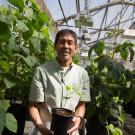
In a study appearing in Nature Communications, researchers identified the function of a key protein that regulates plant immunity. The fundamental research could eventually lead to agricultural practices capable of endowing crops with broad-spectrum resistance against pathogens.
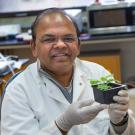
During his career, Savithramma Dinesh-Kumar has published more than 100 research papers and reviews and has received many accolades. For his excellence in molecular plant pathology research, Dinesh-Kumar recently received the Noel T. Keen Award from The American Phytopathological Society.
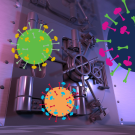
Much like characters in a bank heist, viruses in competitive environments can collaborate for their share of the "score" of successfully co-infecting hosts. But these relationships may change once inside the host cell, according to Assistant Professor Samuel Díaz-Muñoz.
After six years serving as the Executive Associate Dean of Academic Affairs for the College of Biological Sciences, Professor John Harada stepped down from the post at the end of June. He'll continue his research on seeds and the gene networks governing their development.