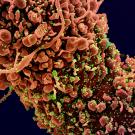
To stay a step ahead of coronavirus, an interdisciplinary team of UC Davis researchers will use mathematics, data science and experimental biology to predict potential mutations of the virus.
Studies with laboratory mice at the UC Davis Center for Neuroscience show how activation of the mother’s immune system during pregnancy can lead to neurological problems in offspring. Researchers have now found a way to detect which mice are susceptible to this effect
Working out of the UC Davis Center for Neuroscience, Kathryn Prendergast studies how viral infection during pregnancy leads to an increased risk of offspring developing autism spectrum disorders or schizophrenia.
While attending the UC Davis College of Biological Sciences, alum Arik Davidyan investigated testosterone’s role in muscle mass gain, maintenance and decay, using mice as experimental models.
Social distancing has Americans mostly out of the places they usually gather and in their homes as we try to reduce the spread of COVID-19. But some buildings, such as hospitals and grocery stores, have to remain open, and at some point, most of us will go back to the office or workplace.
UC Davis Assistant Professor Lucas Smith was selected by The Hartwell Foundation to receive the prestigious 2019 Hartwell Individual Biomedical Research Award. The award will support Smith’s research on finding promising therapies that can improve mobility and quality of life for children with cerebral palsy.
Biofuels are an important part of the broader strategy to replace petroleum-based gasoline, diesel, and jet fuels that we use today. However, biofuels have so far not reached cost parity with conventional petroleum fuels.
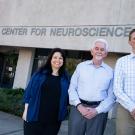
At the UC Davis Center for Neuroscience, researchers collaborate in state-of-the-art facilities to find solutions to help treat, prevent and cure brain conditions, like schizophrenia, autism, depression and Alzheimer’s disease, among others.
The popular painkiller ibuprofen may have more significant effects on the liver than previously thought, according to new research from the University of California, Davis. The study in laboratory mice also shows marked differences between males and females.