Research Stories

Single-protein Images Show How E. coli Repairs DNA While Replicating It

The success of E. coli bacteria depends on their ability to multiply very rapidly by dividing into new cells. The bacteria can divide as quickly as they can make an entire new copy of their DNA while minimizing errors. New work from researchers at the University of California, Davis College of Biological Sciences answers a key question about how E. coli fixes damage to DNA in the middle of duplicating it.

Understanding Growth Regulation by Protein Degradation in Trees for Bioenergy

The U.S. Department of Energy is funding a project at the UC Davis College of Biological Sciences to study the function of genes that regulate growth and wood formation in poplar trees. The three-year, $2.5 million project is led by Nitzan Shabek, assistant professor in the UC Davis Department of Plant Biology together with Andrew Groover at the USDA Pacific Southwest Research Station in Davis and Justin Walley, Iowa State University.

Understanding Healthy Function of Tau, Protein Associated with Dementia

In Alzheimer’s disease and other neurodegenerative dementias, proteins that normally play a role in healthy brain tissue turn bad, clumping together to form insoluble plaques and tangles as neurons wither and die. Exactly how these proteins are connected to disease — and whether they can be targeted in some way to slow, stop or reverse its progression — remains a challenging problem.

Study Reveals How the Ovarian Reserve is Established

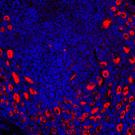
Fertility is finite for mammalian females. From birth, females possess a limited number of primordial follicles that are collectively called the ovarian reserve. Within each follicle is an oocyte that eventually becomes an egg. But with age, the viability of the ovarian reserve decreases.

“Despite its fundamental importance, our understanding how the ovarian reserve is established and maintained remains poor,” said UC Davis Professor Satoshi Namekawa, Department of Microbiology and Molecular Genetics.


New Technology Solves Mystery of Respiration in Tetrahymena

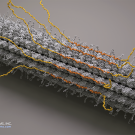
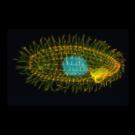
Tetrahymena, a tiny single celled-organism, turns out to be hiding a surprising secret: it’s doing respiration – using oxygen to generate cellular energy – differently from other organisms such as plants, animals or yeasts. The discovery, published March 31 in Science, highlights the power of new techniques in structural biology and reveals gaps in our knowledge of a major branch of the tree of life.

Unlocked Enzyme Structure Shows How Strigolactone Hormone Controls Plant Growth

As sessile organisms, plants have to continually adapt their growth and architecture to the ever-changing environment. To do so, plants have evolved distinct molecular mechanisms to sense and respond to the environment and integrate the signals from outside with endogenous developmental programs.

New research from Nitzan Shabek’s laboratory at the UC Davis College of Biological Sciences, published in Nature Plants, unravels the underlying mechanism of protein targeting and destruction in a specific plant hormone signaling pathway.