Research Stories

Why Sunflowers Face East

Sunflowers face the rising sun because increased morning warmth attracts more bees and also helps the plants reproduce more efficiently, according to a study by researchers at the University of California, Davis. The results were published Aug. 9 in New Phytologist.

“It’s quite striking that they face east,” said Stacey Harmer, professor of plant biology in the UC Davis College of Biological Sciences and senior author on the paper. “It’s better for them to face east, as they produce more offspring.”

Evolutionary Thinking

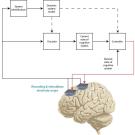
We watch a ball as it falls into our glove. We hear a strange sound in another part of the house and listen intently. In neuroscience, the act of narrowing our senses in response to an environmental event is called “attention,” and it is understood that when we attend to a stimulus, we lose the ability to focus on other surrounding inputs.

Interrupting the Development of Cancer Cells

Think of chromosomes as nature’s shoelaces. Built from DNA, these thread-like structures carry and ferry the genetic information necessary for life. To maintain genetic integrity, chromosomes possess protective structures located at their ends called telomeres. These telomeres are like the plastic tips of shoelaces, preventing the genetic thread from unraveling as cells continuously divide.

Drought Changes Root Microbiome

Drought can have a lasting impact on the community of microbes that live in and around roots of rice plants, a team led by UC Davis researchers has found. Root-associated microbes help plants take up nutrients from the soil, so the finding could help in understanding how rice responds to dry spells and how it can be made more resilient to drought. The work was published July 22 in Nature Plants.

$1 Million Keck Foundation Grant Backs Research to "Build a Brain"

A team of scientists from UC Davis and Rice University are starting small as they begin to figure out how to build an artificial brain from the bottom up.

Celina Juliano, an associate professor in the Department of Molecular and Cellular Biology, and Jacob Robinson of Rice University’s Brown School of Engineering have won a $1 million Keck Foundation grant to advance the team’s synthetic neurobiology effort to define the connections between neurons and muscles that drive programmed behaviors in living animals.